


Did you know that before he became a well-known writer, Charles Dickens wanted to become an actor instead? He famously secured an audition at Covent Garden Theatre in 1832 but had to miss it due to a heavy cold. 1
As fate would have it, he later discovered his gift for writing, began a writing career, and never looked back. Today, he remains one of the most beloved writers of all time, with his words and stories combining social criticism, compassion, humour, and moral insights that continue to resonate in modern-day society.
In this article, we will explore some of his best quotes, examining their meanings, context, significance, and how to quote them properly.
“It was the best of times, it was the worst of times…” — A Tale of Two Cities
The quote is meant to evoke contrast as the plot thickens in the novel, between characters and societies.


Most Famous Charles Dickens Quotes
First, let's begin with some of Dickens' most widely recognised lines across all major novels.
It was the best of times, it was the worst of times...
Charles Dickens, A Tale of Two Cities, 1859
This is undoubtedly one of the most famous novel openings of all time. Dickens' narration sets the tone for the entire novel in A Tale of Two Cities, exploring society's contradictions — where the best of times and worst of times can both be true at the same time.
Dickens cleverly uses a historical setting, looking ahead to the French Revolution, to explore the complexity of human experience, where progress and suffering can exist at the same time. The quote remains relevant in the 21st century because modern life, too, can bring remarkable progress alongside conflict, inequality, uncertainty, and suffering.
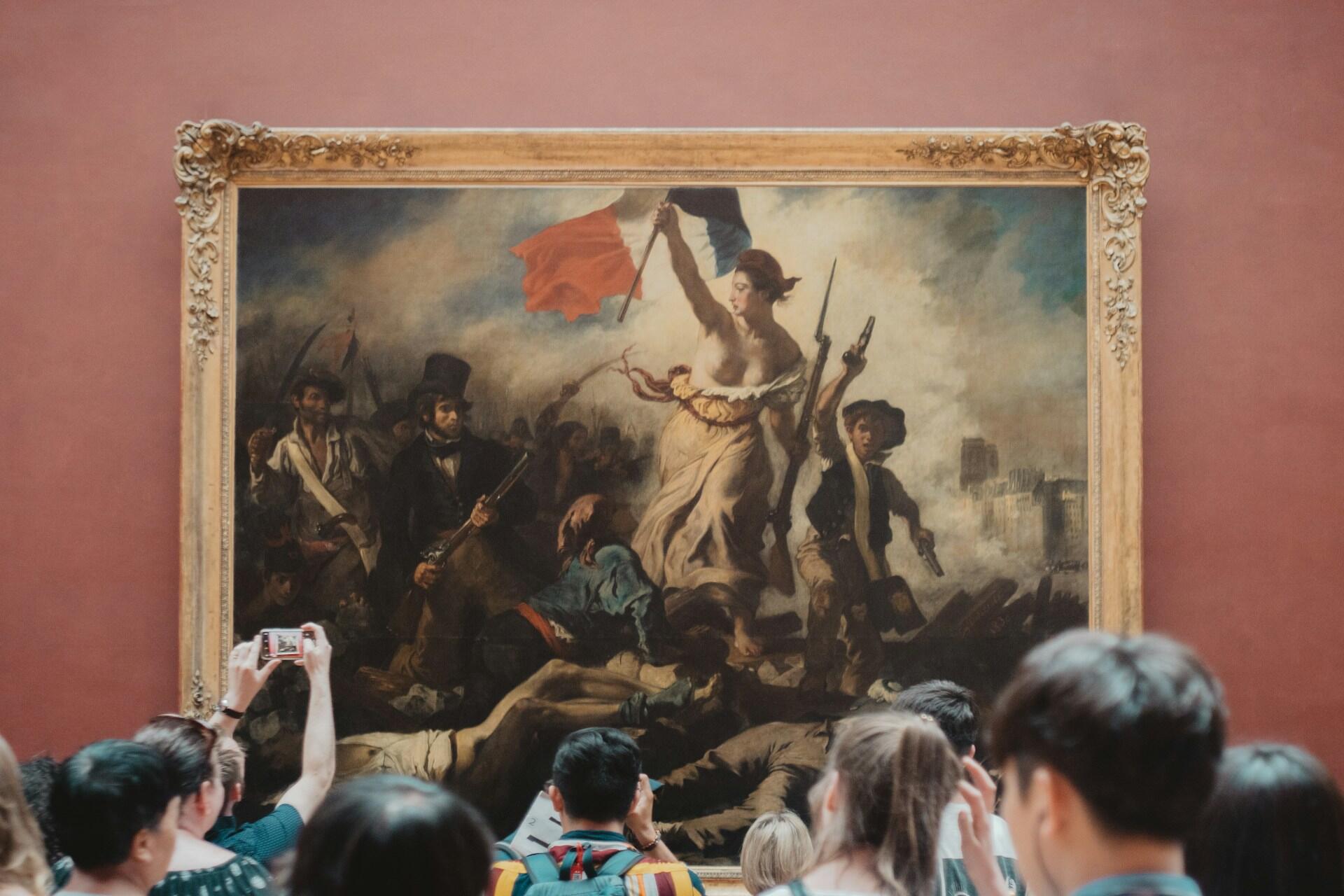
Please, sir, I want some more.
Charles Dickens, Oliver Twist, 1838
Why does a child's simple dialogue become so iconic? It reflects the mistreatment of young orphans during the Victorian era who were forced to labour to survive. Oliver was bold and courageous to request more even from the adults.
In just a few words, the sentence highlights two things: a basic universal right to be fed and full, as well as the brutality of the workhouse system.
Bah! Humbug!
Charles Dickens, A Christmas Carol, 1843
This is the signature line of Ebenezer Scrooge, the novel's main character. It's short and memorable, capturing Scrooge's hatred of and rejection of Christmas.
It became very popular among modern adaptations of the novel and soon became the universal symbol of grumpy scepticism, being used in everyday life too!
| Quote | Source | Theme |
|---|---|---|
| “It was the best of times, it was the worst of times…” | A Tale of Two Cities (1859) | Contradiction & Society |
| “Please, sir, I want some more.” | Oliver Twist (1838) | Poverty & Injustice |
| “Bah! Humbug!” | A Christmas Carol (1843) | Christmas & Scrooge |
Review some of the most famous lines by Virginia Woolf.
Charles Dickens Quotes About Life, Hope & Human Nature
Dickens often used his characters to highlight universal human experiences, whether it's the good, bad, or ugly. Here are some of his quotes that describe how humans can hope and rise to challenges in life. 2
Suffering has been stronger than all other teaching, and has taught me to understand what your heart used to be. I have been bent and broken, but - I hope - into a better shape.
Charles Dickens, Great Expectations,1861
Context and meaning
- Near the end of the story in chapter 59, Estella told Pip about her reflection on suffering due to an abusive marriage.
- Her experiences have made her a better and more understanding person.
Why it remains relevant
- Adversity and life challenges can teach us what is more important and change us for the better.
- It gives us hope that suffering is not the end of the story. We can grow out of it.
No space of regret can make amends for one life's opportunities misused.
Charles Dickens, A Christmas Carol, 1843
Context and meaning
- Jacob Marley (now a ghost) told Scrooge in Stave One that he regretted spending too much time in his business while neglecting the needs of others.
- It's a reminder that we should make the best out of life's opportunities while we can before it's too late.
Why it remains relevant
- It reminds us that time waits for no one, and it cannot be recovered once it's gone.
- Our time should be spent on what we value the most: people and relationships.
Heaven knows we need never be ashamed of our tears, for they are rain upon the blinding dust of earth, overlying our hard hearts.
Charles Dickens, Great Expectations, 1861
Context and meaning
- Pip said this as he left Joe (his brother-in-law) and his home.
- Tears are not a sign of weakness, and they're something to express our emotions and understand how we truly feel about something.
Why it remains relevant
- Until today, many people still avoid shedding tears to hide their emotions.
- A reminder that tears are not something to be ashamed of, and we should not be afraid to be vulnerable and express our emotions.
Discover the power of encouragement and hope through the words of Maya Angelou.
Charles Dickens Quotes About Love, Family & Friendship
Dickens also often highlights different relationship dynamics in novels, whether it's about romantic love, friendships, or domestic life.
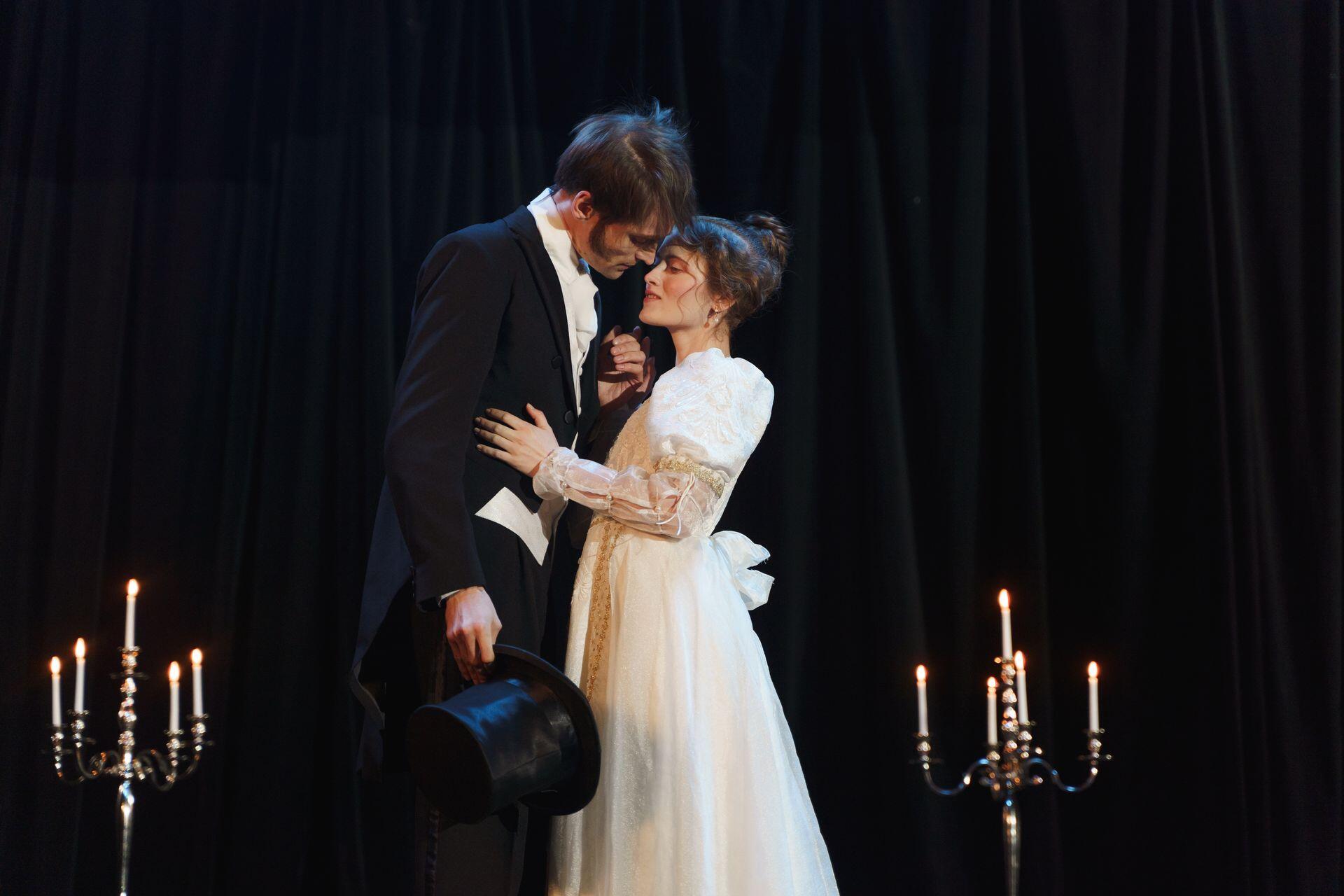
No one is useless in this world who lightens the burdens of another.
Charles Dickens, Our Mutual Friend, 1865
Context and meaning
- John Rokesmith (John Harmon) says this to Bella Wilfer, reassuring her of her worth when she doubted herself.
- He reminds her that anyone who makes another person's life easier has value.
Why it remains relevant
- A reminder that our worth is not measured by worldly success, achievements, or wealth.
- Acts of kindness and helping others enrich our lives with meaning and purpose.
I loved her simply because I found her irresistible. Once for all; I knew to my sorrow, often and often, if not always, that I loved her against reason, against promise, against peace, against hope, against happiness, against all discouragement that could be.
Charles Dickens, Great Expectations, 1861
Context and meaning
- Pip professed his love for Estella; despite recognising her shortcomings and how irrational his love was, he still loved her.
- He knows that his love for Estella is not based on reason.
Why it remains relevant
- It captures the complexity of love — it's often beyond our control and understanding.
- Sometimes people remain attached in a relationship even though it brings them pain.
The pain of parting is nothing to the joy of meeting again.
Charles Dickens, Nicholas Nickleby, 1839
Context and meaning
- Nicholas Nickleby reflected on his feelings on his first separation from his mother and sister after he had to leave home for employment.
- He imagines the joy of being reunited again, even though they have to be separated for now.
Why it remains relevant
- Separation remains a big part of family life today, be it for work, studies, or other reasons.
- It serves as a hopeful reminder that being reunited with them will make the pain of temporary separation worthwhile.
Explore the world of romance and marriage through some of Jane Austen’s most memorable quotes.
Charles Dickens Quotes About Poverty, Society & Injustice
Dickens remains a beloved author because of his social criticism about the real happenings during the Victorian era. He did not sugarcoat his words around major issues such as debtors' prisons, child labour, and industrial working conditions.
Charles Dickens himself had to work in a boot polish factory at the age of 12 after his father, John Dickens, was imprisoned for debt in Marshalsea Prison in 1824. 3
All our lives, we have seen our sister-women suffer, in themselves and in their children, poverty, nakedness, hunger, thirst, sickness, misery, oppression and neglect of all kinds?
Charles Dickens, A Tale of Two Cities, 1859
Let's look at the significance of this quote:
| Column | Content |
|---|---|
| Explanation | Madame Defarge describes the suffering that women and children have experienced for generations. Over the years, she had harbored deep anger caused by poverty and oppression. |
| Meaning | The quotes shows how long‑term hardship hardens people and fuels a desire for revenge against the privileged. |
| Context | Madame Defarge says this to Lucie Manette when Lucie begs her to spare her husband, Charles Darnay. Madame Defarge refuses, explaining that she has seen too many women and children suffer. |
| Why it remains relevant | Poverty and inequality can affect whole families and communities across generations. It also reminds us that long‑term injustice can lead to anger and demands for change. |
The one great principle of the English law is to make business for itself.
Charles Dickens, Bleak House, 1853
Let's review the meaning and significance of this quote:
| Column | Content |
|---|---|
| Explanation | Dickens criticises a legal system where it seems to create more work for itself instead of providing simple and fair justice for society. |
| Meaning | The quote expresses how bureaucracy can lose sight of its purpose, serving lawyers and procedure rather than ordinary people seeking resolution. |
| Context | The quote appears in Chapter 39 of Bleak House (1853), where Dickens attacks the English legal system through the long‑running Jarndyce and Jarndyce case and the character of Mr Vholes. |
| Why it remains relevant | It still speaks today where society are facing repurcussions from the complicated legal systems. It reminds us that institutions should serve people rather than make their problems worse. |
Now, what I want is, Facts. Teach these boys and girls nothing but Facts. Facts alone are wanted in life.
Charles Dickens, Hard Times ,1854
Let's explore the relevance of this quote:
| Column | Content |
|---|---|
| Explanation | Mr. Gradgrind upholds and enforces the notion that children should learn facts and nothing else in his classroom. Dickens uses this idea to pose a question on education where children should/should not be given room for imagination, feelings, or creativity. |
| Meaning | The quote expresses a utilitarian, “Facts‑only” philosophy that treats children as empty vessels to be filled with data. There's some missing pieces for holistic education where emotion, wonder and moral development are neglected. |
| Context | The quote appears at the very beginning of Hard Times (1854), Chapter 1, when Gradgrind addresses children in his classroom and explains his strict approach to education. |
| Why it remains relevant | It raises a question that still matters today: should education focus only on facts and results, or should it also cultivate creativity, emotions, and independent thinking? |
Here's an overview of social issues highlighted in Dickens' writings.
| Year | Novel | Social issue / reform concern | What Dickens highlighted |
|---|---|---|---|
| 1837–1839 | Oliver Twist | Poverty, workhouses & child exploitation | Exposed the harsh treatment of poor children under the New Poor Law, especially in workhouses; Oliver’s hunger and punishment drew attention to systemic neglect. |
| 1838–1839 | Nicholas Nickleby | Education & child abuse | Attacked cruel private boarding schools (notably Yorkshire “academies”) through Dotheboys Hall and Wackford Squeers, highlighting child neglect and exploitation. |
| 1843 | A Christmas Carol | Poverty, inequality & social responsibility | Challenged indifference to the poor and urged compassion, especially toward children (e.g., Tiny Tim and the “surplus population” idea). |
| 1843–1844 | Martin Chuzzlewit | Self‑interest, hypocrisy & social responsibility | Satirised selfishness and greed (the Chuzzlewit family) and questioned a society that ignores others’ suffering. |
| 1849–1850 | David Copperfield | Childhood, poverty & exploitation | A semi‑autobiographical bildungsroman showing how neglect, abuse, poverty, and exploitative work shape a child’s life and character. |
| 1852–1853 | Bleak House | Legal injustice & bureaucracy | Criticised the slow, costly Court of Chancery through the endless Jarndyce and Jarndyce case, showing how legal delay ruins lives. |
| 1854 | Hard Times | Industrialisation, education & working conditions | Condemned a “Facts‑only” utilitarian education and the dehumanising effects of industrial society on workers and families. |
| 1855–1857 | Little Dorrit | Debt, bureaucracy & poverty | Examined debtors’ prisons (Marshalsea) and government inefficiency (the “Circumlocution Office”), showing how institutions trap people. |
| 1859 | A Tale of Two Cities | Poverty, inequality & revolution | Explored the extreme inequality and suffering that helped fuel the French Revolution, while examining violence, justice, and social change. |
| 1860–1861 | Great Expectations | Class, wealth & social mobility | Questioned the obsession with status and wealth, showing how class expectations distort identity and relationships. |
| 1864–1865 | Our Mutual Friend | Wealth, poverty & social class | Critiqued the corrupting power of money and sharp class divisions in Victorian society. |
Like Dickens, George Orwell also used literature to criticise society.
Charles Dickens Christmas Quotes
Of course, we cannot miss out on the relationship between Dickens and Christmas.
After all, A Christmas Carol is one of the representative works of literature that represents the Christmas spirit.
The novel introduced us to many iconic characters such as Ebenezer Scrooge, Jacob Marley, the different Christmas spirits, as well as Tiny Tim.
Additionally, it left us with many memorable quotes that remind us of the merry season.
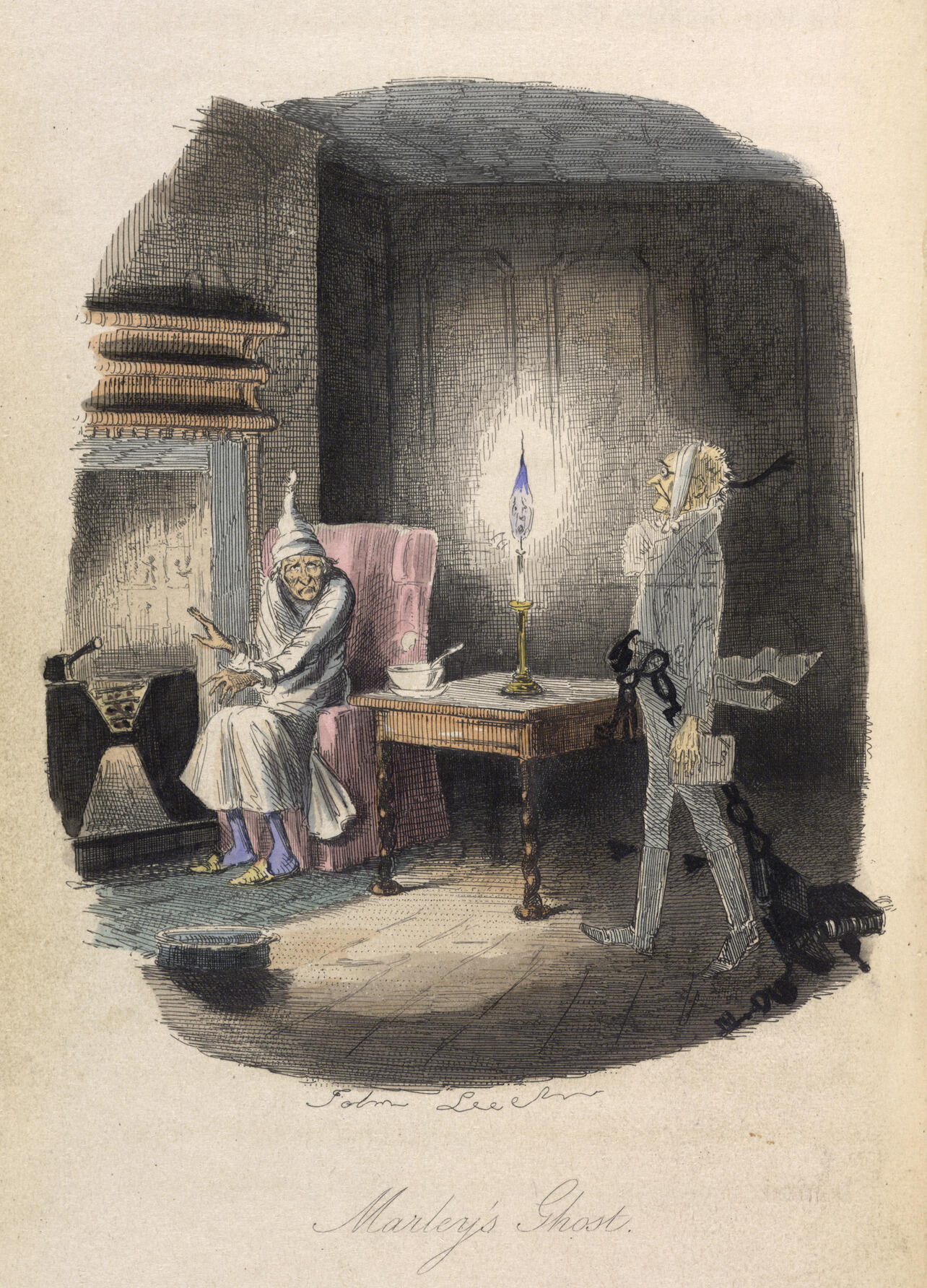
Let's explore these lovely quotes:
I will honour Christmas in my heart, and try to keep it all the year.
Charles Dickens, A Christmas Carol, 1843
There is nothing in the world so irresistibly contagious as laughter and good humor.
Charles Dickens, A Christmas Carol, 1843
God bless us, everyone.
Charles Dickens, A Christmas Carol, 1843
Charles Dickens Books, Quotes, and Their Themes
Throughout Dickens's lifetime, he wrote more than 10 major novels, as follows:
| Novel | Publication year | Gutenberg link |
|---|---|---|
| The Pickwick Papers | 1836–1837 | The Pickwick Papers |
| Oliver Twist | 1837–1839 | Oliver Twist |
| Nicholas Nickleby | 1838–1839 | Nicholas Nickleby |
| The Old Curiosity Shop | 1840–1841 | The Old Curiosity Shop |
| Barnaby Rudge | 1841 | Barnaby Rudge |
| Martin Chuzzlewit | 1843–1844 | Martin Chuzzlewit |
| Dombey and Son | 1846–1848 | Dombey and Son |
| David Copperfield | 1849–1850 | David Copperfield |
| Bleak House | 1852–1853 | Bleak House |
| Hard Times | 1854 | Hard Times |
| Little Dorrit | 1855–1857 | Little Dorrit |
| A Tale of Two Cities | 1859 | A Tale of Two Cities |
| Great Expectations | 1860–1861 | Great Expectations |
| Our Mutual Friend | 1864–1865 | Our Mutual Friend |
| The Mystery of Edwin Drood | 1870, unfinished | The Mystery of Edwin Drood |
Here are other examples of notable quotes from Charles Dickens' books, which are considered representative works of the Victorian era.
| Book | Selected Quote | Themes |
|---|---|---|
| A Tale of Two Cities | “Think now and then that there is a man who would give his life, to keep a life you love beside you.” | Love, sacrifice, devotion, selflessness, redemption |
| Great Expectations | “So,” said Estella, “I must be taken as I have been made. The success is not mine, the failure is not mine, but the two together make me.” | Identity, personal responsibility, social influence, nature vs. nurture |
| A Christmas Carol | “I wear the chain I forged in life.” | Consequences, regret, morality, personal responsibility, redemption |
| Oliver Twist | “There are books of which the backs and covers are by far the best parts.” | Education, appearances, reading, satire, social commentary |
| David Copperfield | “A loving heart was better and stronger than wisdom.” | Love, emotional wisdom, compassion, family, human connection |
| Bleak House | “What the poor are to the poor is little known, excepting to themselves and God.” | Poverty, compassion, solidarity, social inequality, human suffering |
| Hard Times | “There is a wisdom of the Head, and there is a wisdom of the Heart.” | Reason vs. emotion, education, humanity, compassion, emotional intelligence |
You might want to explore the quotes of another key figure in the Victorian era, Oscar Wilde.
About Charles Dickens
7 February 1812 (died in 1870)
Portsmouth, Hampshire, England
Victorian era
Oliver Twist, A Christmas Carol, A Tale of Two Cities, Great Expectations
Have you ever wondered why Dickens is so good at capturing social issues of the Victorian era through a fictional lens?
Before venturing into his career as a novelist, Dickens worked as a journalist and parliamentary reporter. Those years of working, alongside his childhood experience, helped him develop an eye for people, the economy, politics, as well as social problems. 4
1812
Dickens was born in Portsmouth, England, on 7 February 1812
1824
His father (John Dickens) was imprisoned for debt in Marshalsea
12-year-old Charles was sent to work at Warren's Blacking Factory
1833
His first story was published in the Monthly Magazine
1836
The Pickwick Papers began serial publication (1836–37)
He also married Catherine Hogarth (2 April 1836)
1837-1839
Oliver Twist published in serial form
1838-1839
Nicholas Nickleby published in serial form
1843
A Christmas Carol published
1849-1850
David Copperfield published in serial form
1852-1853
Bleak House published in serial form
1854
Hard Times published in serial form
1859
A Tale of Two Cities published
1860-1861
Great Expectations published in serial form
1864-1865
Our Mutual Friend published in serial form
1870
Passed away on 9 June 1870 at the age of 58
He was buried in Poets’ Corner, Westminster Abbey
Interested in knowing more about the pinnacle of stage plays and sonnets? Explore these best quotes of Shakespeare.
Using Charles Dickens Quotes in Writing and Academic Work
Dickens' lasting legacy certainly makes him one of the most widely quoted authors in the literary world. These days, his quotes are widely shared online, but most of the time, they have been shortened, loosely paraphrased, or even misattributed.
If you are a Dickens fan, you can visit the museum, which is located in Dickens’s former London home. It plays an important role in helping readers and students understand Dickens's words in their original context. You can find the original manuscripts of Dickens's work and valuable resources for researching his writing and verifying quotations. 5
It's always important to compare a quotation with the original novel and do the following:
| Good practice | Elaboration |
|---|---|
| Attribute the correct novel | Give the full title of the Dickens work where the quotation appears, such as A Tale of Two Cities, David Copperfield or A Christmas Carol. |
| Name the character when relevant | If the words are spoken by a character of the novel, identify the speaker rather than simply saying “Dickens said.” |
| Distinguish narration from dialogue | Dickens’s narrator sometimes makes observations that are not spoken by any character. Make this clear when explaining a quote. For example, the opening line of A Tale of Two Cities is a narration. |
| Verify the wording | Always check the quotation against a reliable edition or full text instead of an online quotation website before using it in an essay, article, or printed publication. For example, Project Gutenberg provides full texts of many Dickens works. |
| Look out for paraphrases | Some popular websites shorten, modernise, or slightly change Dickens’s original wording. Do not assume a widely repeated quote is a original quote. |
| Make sure you know the context before sharing | A quotation can mean something different depending on who says it, who they are speaking to, and what is happening in the story. |
If you are doing a deep literary analysis for an assignment or presentation, you can refine your source attribution by distinguishing between narration and dialogue, identifying the speaker when relevant to provide more context.
Narrator quote
It was the best of times, it was the worst of times...
Third-person narrator in A Tale of Two Cities (1859)
Character quote
I wear the chain I forged in life....
Jacob Marley in A Christmas Carol (1843)
Otherwise, a normal source attribution consisting of the author, work, and year of publication will do.
We hope you have enjoyed reading this article on some of the most famous and timeless Charles Dickens quotes. You can also check out some of the most famous literary quotes of all time.
References
- Theatrical Dickens. (2025). Charles Dickens Museum. https://dickensmuseum.com/blogs/explore/theatrical-dickens
- Charles Dickens quotes. (2019, July 9). Penguin.Co.Uk. https://www.penguin.co.uk/discover/articles/10-best-charles-dickens-quotes
- Dickens’s Father | CollectionsOnline. (2026). Dickensmuseum.Com. https://www.collections.dickensmuseum.com/pro885
- Dickens the Journalist | CollectionsOnline. (2023). Dickensmuseum.Com. https://www.collections.dickensmuseum.com/pro883
- Home | CollectionsOnline. (2026). Dickensmuseum.Com. https://www.collections.dickensmuseum.com/home
Summarise with AI:
Did you like this article? Leave a rating!

 Loading...