
Although several Commonwealth countries share historical connections with the British honours tradition, each has developed its own approach to recognising service and achievement. The Orders of the Commonwealth reflect this diversity, with national distinctions recognising contributions across public life, culture, sport and other fields.
📍In Australia, actor Hugh Jackman was appointed a Companion of the Order of Australia for his contributions to the performing arts and advocacy. 1
📍In Canada, novelist Margaret Atwood was appointed a Companion of the Order of Canada in recognition of her contribution to literature. 2
📍In New Zealand, former All Blacks captain Richie McCaw became a Member of the Order of New Zealand following a career that helped shape the country's sporting history. 3
These examples illustrate how national honours systems recognise achievement in different spheres, while reflecting each country's own traditions and institutions.


What Are the Orders of the Commonwealth?
First, it is worth clarifying that Orders of the Commonwealth is not the name of a single official award. Instead, the term refers broadly to the different honours systems used across Commonwealth countries.
Each country has its own orders, decorations, medals, grades and post-nominal letters, with its own rules for recognising service and achievement. This also applies to the Commonwealth realms, including Australia, Canada and New Zealand, where King Charles III is head of state, but each country maintains its own national honours system. 4
The honours systems across the Commonwealth share a common purpose: to recognise significant contributions through professional achievement and service to society.
How Do Commonwealth Honours Systems Work?
The Commonwealth honours system works across different elements.
| Element | What it means | Example |
|---|---|---|
| Order | A structured society of honour, usually with several ranks or levels | Order of Australia; Order of Canada; Order of New Zealand |
| Rank or class | A level within an order, showing the relative seniority of the award | Companion, Officer, Member |
| Decoration | An award for a specific type of achievement, often bravery, gallantry or distinguished service | Australian Bravery Decorations; New Zealand Bravery Awards |
| Medal | Often a lower-level or service-based award, though terminology varies | Medal of the Order of Australia (OAM); Queen’s Service Medal (QSM) |
| Post-nominal letters | Letters placed after a recipient’s name | AC, AO, AM, OAM; CC, OC, CM; ONZM, MNZM |
Order and ranks
The word order has roots in a long European tradition of organised bodies of honour, including medieval orders of chivalry. Over time, the term also came to describe formal institutions created by monarchs or states to recognise merit and service. 5
Australia, Canada and New Zealand inherited and adapted this British and broader European honours tradition before developing their own national honours systems.
Australia
- Order of Australia
- Established in 1975 by Queen Elizabeth II
- Has four appointment levels
Canada
- Order of Canada
- Established in 1967 by Queen Elizabeth II
- Has three appointment levels
New Zealand
- Order of New Zealand
- Established in 1987 by Queen Elizabeth II
- Single-tiered appointment
Decorations and medal
Decorations and medals are awarded to recognise acts of service, achievement or bravery. While the terminology and criteria vary between countries, both form part of their national honours systems.
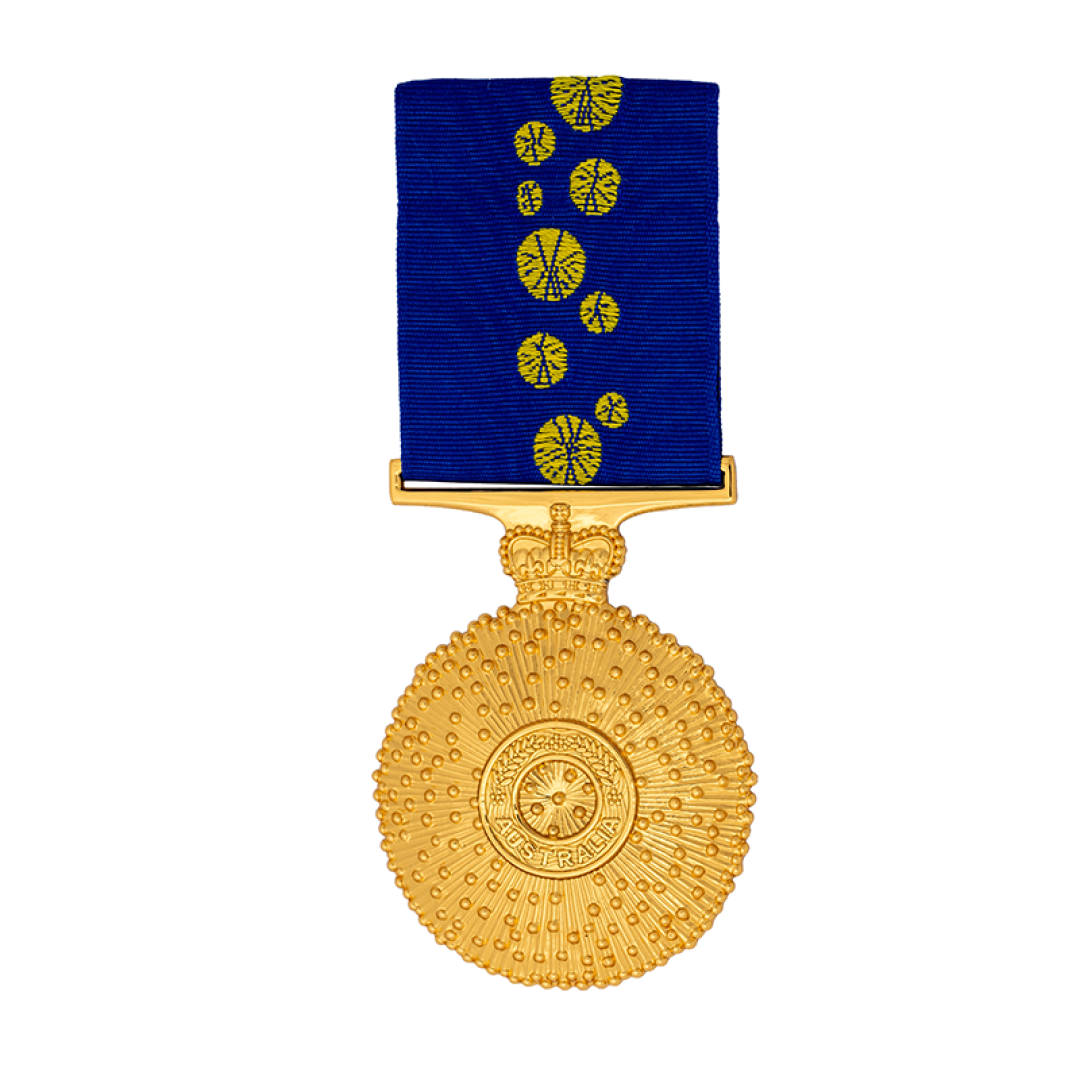
For example, the Medal of the Order of Australia (OAM), which is part of the Order of Australia and recognises meritorious service or contribution to a specific community, local area, or group.
The medal features a badge with a gold-plated silver insignia of the Order in the centre, and inscribed with the word ‘Australia’ in gold capital letters. 6
Post-nominal letters
In the context of national honours, post-nominal letters are abbreviations placed after a person's name to identify their award or class of appointment.
Some examples include:
- AC — Companion of the Order of Australia.
- OC — Officer of the Order of Canada.
- ONZM — Officer of the New Zealand Order of Merit.
National Orders of the Commonwealth: How They Compare
Although connected by a shared Commonwealth history, Australia's, Canada's and New Zealand's systems each have distinct structures and conventions. Let's explore the highest order of these three countries.
| Country | Highest / principal national order | Levels or membership | Post-nominal | Key feature |
|---|---|---|---|---|
| Australia | Order of Australia | Companion, Officer, Member, Medal of the Order | AC, AO, AM, OAM | Has General and Military Divisions. |
| Canada | Order of Canada | Companion, Officer, Member | CC, OC, CM | Canada’s cornerstone civilian honour, established in 1967. |
| New Zealand | Order of New Zealand | Single class: Ordinary, Additional and Honorary Members | ONZ | New Zealand’s highest honour; Ordinary membership is limited to 20 living people. |
🇦🇺 The Order of Australia
The Order of Australia recognises and celebrates the outstanding service or exceptional achievement of Australians at the local, national and international level.
Its four current levels are Companion (AC), Officer (AO), Member (AM) and Medal of the Order (OAM), and it is divided into General and Military Division. 7
Recipients can be elevated to a higher level of the Order of Australia. For example, Philanthropist Paula Fox was appointed an Officer (AO) in 2015 before being elevated to Companion (AC) in 2026. 8
Under the Order of Australia’s rules, a recipient appointed to a higher class within the same division generally wears only the insignia of the higher class and must return the insignia of the lower class. There are exceptions for recipients who hold honours across both the General and Military Divisions, who may retain and wear the insignia of both divisions. 9
🇨🇦 The Order of Canada
The Order of Canada also recognises outstanding achievement, dedication to the community and service to the nation, with appointments at Companion (C.C), Officer (O.C) , and Member level (C.M).
Officers and Members can be promoted five years after their last appointment based on extended exceptional service to the country. 10
For instance, famous Canadian singer Celine Dion was first awarded the Officer of the Order of Canada in 1998.
She was later promoted to Companion of the Order of Canada in 2008 for her excellent singing career as well as commitment to a number of social and humanitarian causes. 11

🇳🇿 The Order of New Zealand
New Zealand’s highest honour is the Order of New Zealand (ONZ), which recognises outstanding service to the Crown and people of New Zealand, whether in a civil or military capacity.
Unlike the multi-level Orders of Australia and Canada, the Order of New Zealand has a single class of membership. Ordinary membership is limited to 20 living people at any time. 12
It's easy to be confused with these two honours, but New Zealand’s highest honour is the Order of New Zealand, while the New Zealand Order of Merit is a separate multi-level order recognising meritorious service and achievement.
The latter consists of five levels: Dames and Knights Grand Companions, Dames and Knights Companions, Companions, Officers and Members. 13
Who Else Can Receive Commonwealth Honours?
Alongside ordinary appointments, some Commonwealth honours systems also allow for additional or honorary membership.
These appointments may be made on special occasions, reflect a person’s royal or constitutional role, or recognise people who would not normally qualify for ordinary membership.
| Country | Additional members? | Honorary members? | Who qualifies |
|---|---|---|---|
| Australia | No separate “additional” category | Yes | Non-citizens may receive honorary appointments or awards; foreign defence personnel may receive honorary Military Division awards. |
| Canada | No; Canada uses extraordinary appointments instead | Yes | Extraordinary: Royal Family members, Governors General and their spouses, and former Governors General and their spouses. Honorary: non-Canadians. |
| New Zealand | Yes | Yes | Additional Members are appointed on important royal, state or national occasions; Honorary Members include people not eligible for Ordinary membership because of citizenship rules. |
How Are Commonwealth Honours Awarded and Recognised?
Commonwealth honours are usually awarded through a formal process of nomination, independent review, official approval, public announcement and investiture.
The exact process differs by country, but Australia, Canada and New Zealand all allow the members of the public to nominate someone (online these days) who they think is deserving of this recognition.

Here are the official nomination pages for these three countries:
| Country | Order | Official nomination page (clickable link) |
|---|---|---|
| Australia | Order of Australia | Order of Australia |
| Canada | Order of Canada | Order of Canada |
| New Zealand | New Zealand Royal Honours | New Zealand Royal Honours nomination form |
It's worth noting that submitting a nomination does not guarantee an honour. A successful nomination is very dependent on the scale of the nominee's contribution and supporting evidence provided.
Also, the number of honours can be limited, such as in the case of Order of New Zealand, where only 20 living Ordinary members of are allowed at one single time.
Here's an overview of the typical process from the nomination to the final investiture ceremony.
| Step | What happens | Examples |
|---|---|---|
| 1. Nomination | A member of the public, organisation or official submits details of the nominee’s contribution | Anyone can nominate someone for the Order of Australia, Order of Canada or a New Zealand royal honour. |
| 2. Review | Officials or an independent council research the nomination and assess the evidence | Australia’s Honours and Awards Secretariat researches nominations and may contact referees; Canada’s Advisory Council reviews and votes on nominations. |
| 3. Recommendation | A council, committee or minister recommends suitable candidates | Australia’s Council recommends appointments to the Governor-General; New Zealand’s Prime Minister recommends honours to the King. |
| 4. Approval | The Governor-General or King formally approves the award | In Canada, a person becomes a Member of the Order when the instrument of appointment is sealed and signed by the Governor-General. |
| 5. Announcement | Successful recipients are publicly announced | Australia announces awards on Australia Day and the King’s Birthday; New Zealand publishes honours lists at New Year and the King’s Birthday. |
| 6. Investiture | Recipients receive their insignia at an official ceremony | Australia holds investitures at Government House; New Zealand’s Governor-General holds investiture ceremonies on behalf of the King. |
Why Does the Commonwealth Honours System Matter?
Until today, the Commonwealth honours system remain relevant and symbolic in our modern society.

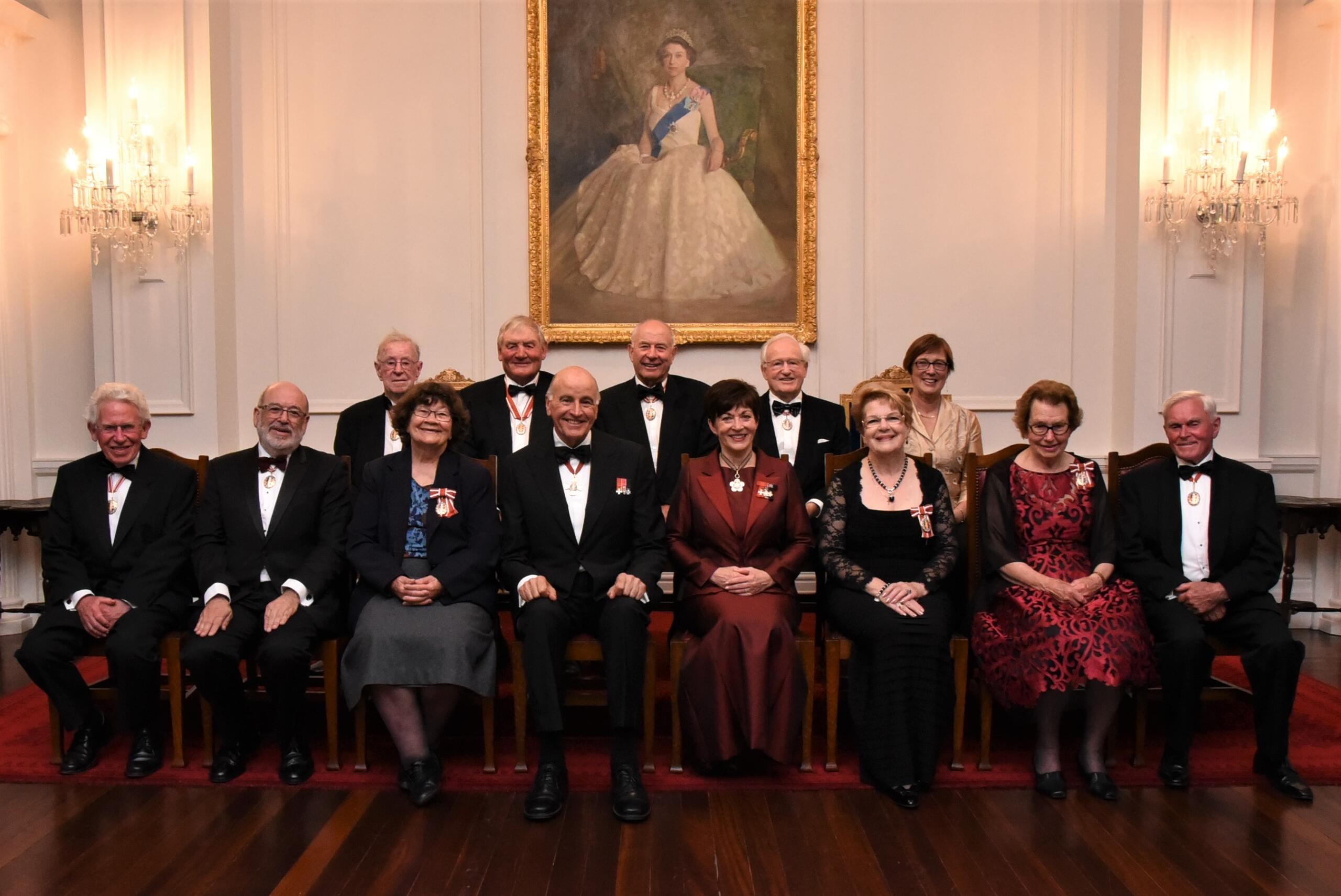
Most importantly, the Commonwealth honour system connects citizens to national institutions through the formal recognition during the investiture ceremonies. 14
The Order of Canada recognises those whose contributions help us see our country and our place in the world with greater clarity and purpose. These appointees, from diverse backgrounds and fields, reflect the talent and determination that shape Canada’s future. At a time of profound global change, their achievements highlight the strength of Canadians and the values we represent to the world. Together, they remind us that building our country’s future is a shared effort that requires ambition and long-term commitment.
Her Excellency the Right Honourable Louise Arbour, Governor General of Canada, reflecting on the Order of Canada in the Canadian honours system
We hope you have enjoyed learning about the significance of the different Commonwealth orders and medals. If you know of anyone who deserves to receive any of them, go ahead and nominate them!
References
- Curtis, Katina. “Hugh Jackman Receives Order of Australia Medal.” The Sydney Morning Herald, 13 Sept. 2019, https://www.smh.com.au/entertainment/celebrity/hugh-jackman-receives-order-of-australia-medal-20190913-p52r5q.html. Accessed 22 Oct. 2026.
- CBC. “Margaret Atwood Thrilled by Award From France Honouring Her Literary Achievements.” CBC, 18 Jan. 2024, https://www.cbc.ca/news/entertainment/margaret-atwood-france-highest-honour-1.7087725. Accessed 22 Oct. 2026.
- RNZ, and Te Reo Irirangi o Aotearoa. “McCaw Appointed to Order of NZ.” RNZ, 14 Apr. 2016, https://www.rnz.co.nz/news/national/301506/mccaw-appointed-to-order-of-nz. Accessed 22 Oct. 2026.
- “Commonwealth Honours.” The Royal Family, 2026, https://www.royal.uk/commonwealth-honours. Accessed 22 Oct. 2026.
- Bonsey, Martin. Order of Australia Review 2011. Government House, Canberra, June 2011, www.gg.gov.au/sites/default/files/2019-06/oofareview2011.pdf. Accessed 22 Oct. 2026
- Pmc.Gov.Au, 2023, https://www.pmc.gov.au/honours-and-symbols/list-australian-honours/medal-order-australia. Accessed 22 Oct. 2026.
- “The Order of Australia | Governor-General of the Commonwealth of Australia.” Gg.Gov.Au, 2019, https://www.gg.gov.au/australian-honours-and-awards/order-australia. Accessed 23 Oct. 2026.
- Mills, David. “Australia Day 2026 Honours List Recognises Annastacia Palaszczuk, Cathy Freeman, Mathias Cormann Among Others.” Australian Financial Review, 25 Jan. 2026, https://www.afr.com/politics/federal/business-leaders-and-former-pollies-line-up-for-australia-day-honours-20260122-p5nwd1. Accessed 23 Oct. 2026.
- Couchcreative, and Canberra. Original Design and Layout. https://www.gg.gov.au/sites/default/files/2021-11/Order%20of%20Australia%20Booklet%20-%20Fifteenth%20Edition%20v2%20-%202021%20Web.pdf. Accessed 23 Oct. 2026.
- Office. “Levels and Insignia.” The Governor General of Canada, 25 Sept. 2017, https://www.gg.ca/en/honours/canadian-honours/order-canada/levels-and-insignia. Accessed 23 Oct. 2026.
- General, Office of the Secretary to the Governor. “Mrs. Céline Dion.” The Governor General of Canada, https://www.gg.ca/en/honours/recipients/146-5134. Accessed 23 Oct. 2026.
- “The Order of New Zealand.” Department of the Prime Minister and Cabinet (DPMC), 5 Nov. 2025, https://www.dpmc.govt.nz/our-programmes/new-zealand-royal-honours/new-zealand-royal-honours-system/components-new-zealand-royal-honours-system/order-new-zealand. Accessed 23 Oct. 2026.
- “The New Zealand Order of Merit.” Department of the Prime Minister and Cabinet (DPMC), 7 May 2024, https://www.dpmc.govt.nz/our-programmes/new-zealand-royal-honours/new-zealand-royal-honours-system/components-new-zealand-royal-honours-system/new-zealand-order-merit. Accessed 23 Oct. 2026.
- The Governor General of Canada. “Governor General Announces 61 New Appointments to the Order of Canada | the Governor General of Canada.” Www.Gg.Ca, 2026, https://www.gg.ca/en/media/news/2026/order-canada-june. Accessed 23 Oct. 2026.
Summarise with AI:
Did you like this article? Leave a rating!

 Loading...